How to brainstorm on your own (and why it often beats a group)
- People brainstorming alone, with ideas pooled later, often produce more than groups.
- In groups only one person speaks at a time, so ideas wait and fade.
- Solo: one question, ten minutes of talking, then sort and pick two.
Start with one clear question, come up with as many answers as you can without judging them, then sort and pick. Research on brainstorming suggests people working alone, with their ideas pooled afterwards, often come up with more than the same people brainstorming together.
Brainstorming has a cosy image: a room, a whiteboard, everyone calling out ideas and nobody allowed to say no. Alex Osborn, an advertising executive, popularised it in the 1940s and 50s, on the theory that a group would produce more ideas than individuals could.
When psychologists tested that, it largely didn't hold. In a well-known 1987 study, Michael Diehl and Wolfgang Stroebe compared brainstorming groups with the same number of people working alone, whose ideas were pooled afterwards. The people working alone came up with more. The main reason was what they called production blocking: in a group only one person can speak at a time, so everyone else is holding an idea, waiting their turn, and some of those ideas don't survive the wait.
Everyone else is holding an idea, waiting their turn, and some of those ideas don't survive the wait.
Groups are still useful for building on ideas and choosing between them. For generating them in the first place, time on your own is hard to beat.
A simple way to do it
Start with a single question, ideally phrased as "How might I…?" Then talk for ten minutes and say every idea that comes, bad ones included. Quantity matters at this stage, and bad ideas are often one step from good ones. When you dry up, push with a prompt: what would make it cheaper, or faster? What's the opposite of what everyone else does? What would a competitor try?
When the time's up, stop generating and start sorting. Group the similar ideas, give each group a name, and pick two that deserve a first step.
Talking keeps the pace up, but it means you need a record to sort afterwards.
Brainstorm solo with TalkGraph
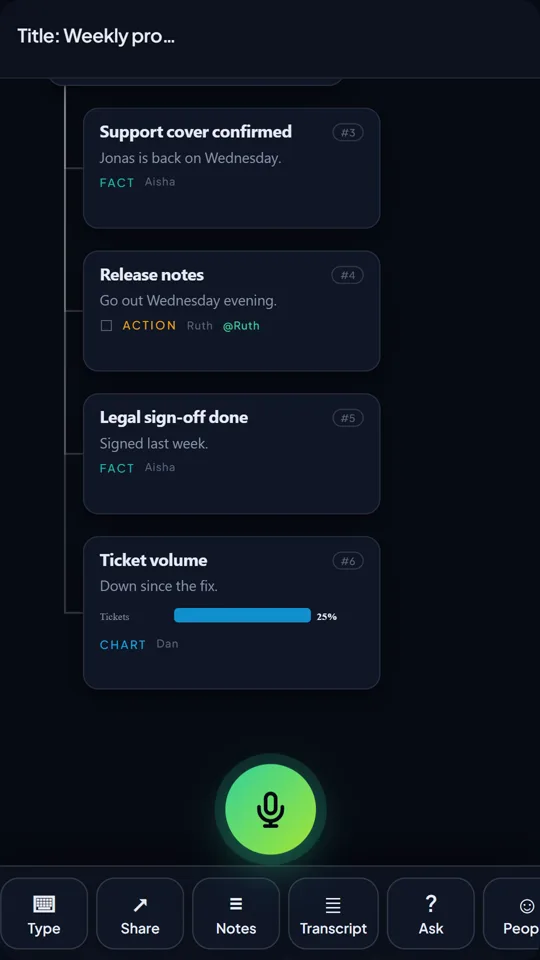
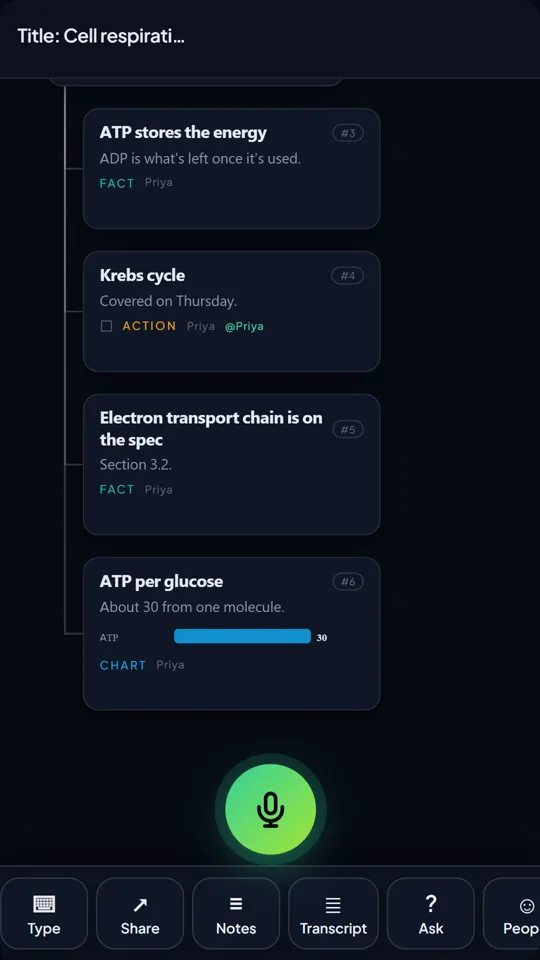
This is what TalkGraph does well. Say your "How might I…?" question, then talk. Every idea lands on the map as a card as you say it, grouped under the topics it belongs to, so the sorting step is half done before you stop. When you dry up and pause, TalkGraph asks you a short question about what you've said so far, a nudge to keep going. And if you want more angles on one idea, you can develop any card with AI.
When you're done, the map is your shortlist: pick the two ideas worth a first step, and come back to the rest later. They're saved in your Brain, where they'll connect to future sessions.
Pick one "How might I…?" question about something you're working on and talk for ten minutes without stopping. Count the ideas afterwards. Most people are surprised.
TalkGraph maps what you say as you speak and asks you the next question. Free to try, no sign-up.

Klevis is the founder of TalkGraph, which he built and shipped solo. He has a First Class MSc in Computing and Information Systems, and writes about thinking, learning and tools that help people think rather than think for them.
LinkedIn →Sources
- Osborn, A. F. (1953). Applied Imagination. Scribner. archive.org/details/appliedimaginati00osbo
- Diehl, M. & Stroebe, W. (1987). Productivity loss in brainstorming groups: Toward the solution of a riddle. Journal of Personality and Social Psychology, 53(3), 497-509. doi.org/10.1037/0022-3514.53.3.497