Socratic questioning, and how to use it on your own ideas
- Socratic questioning tests an idea by asking about it, not arguing for it.
- Six kinds of question cover meaning, assumptions, evidence, other views, consequences and the question itself.
- Alone, you avoid the questions that hurt, which is why a partner helps.
Socratic questioning is testing an idea by asking questions about it rather than arguing for it. Done well, it doesn't hand anyone an answer. It gets them to find the weak spots in their own thinking, which is why they tend to believe what they end up with.
Socrates, at least as Plato writes him, must have been maddening to talk to. He'd ask what you meant by a word, then what you meant by your answer, then whether that squared with something you'd said ten minutes earlier. People often left less sure than when they arrived, which was rather the point.
The method survived because it works. Teachers use it to get students reasoning instead of reciting. Therapists use versions of it to help people test their own assumptions. You can use it on yourself too, although that's harder than it sounds.
The questions
Guides usually sort Socratic questions into about six kinds. There's no need to memorise them; it's enough to recognise the flavours.
- Clarifying: "What exactly do you mean by growth?" "Can you give me an example?"
- Assumptions: "What are you taking for granted?" "What if that weren't true?"
- Evidence: "How do you know?" "What would change your mind?"
- Other views: "How would a customer see this?" "What's the best argument against it?"
- Consequences: "If that's right, what follows?" "Where does this leave us in six months?"
- The question itself: "Is this the right question?" "Why does it matter?"
Why it's hard to do alone
The trouble with questioning yourself is that you know which questions are going to hurt, and you quietly avoid them. Ask yourself what you're assuming about a new project and you'll list the assumptions you're comfortable with. The awkward one, the one the whole thing rests on, rarely makes the list.
That's why people talk ideas through with a friend, a mentor or a co-founder. Someone else doesn't know which questions to steer around.
You know which questions are going to hurt, and you quietly avoid them.
A short version to try
Next time you're stuck on a decision, say it in one sentence. Then answer three questions out loud, honestly: what am I assuming, what would change my mind, and what happens if I'm right? People tend to skip the third one, and it's often the most useful, because it makes you think past the decision to whatever comes after it.
A Socratic partner that's always there
Most AI is built to answer, which makes it a poor Socratic partner by default. TalkGraph goes the other way. As you talk, it maps what you say; when you pause, it asks you one short, open question (never more than 18 words) drawn from the last few things you said, designed to help you develop, challenge or conclude the thought. It doesn't hand you an answer. It hands the thinking back.
It won't know which questions you've been avoiding, and that's rather the point: it doesn't skip them either. Answer out loud and the map grows in the direction you hadn't considered.
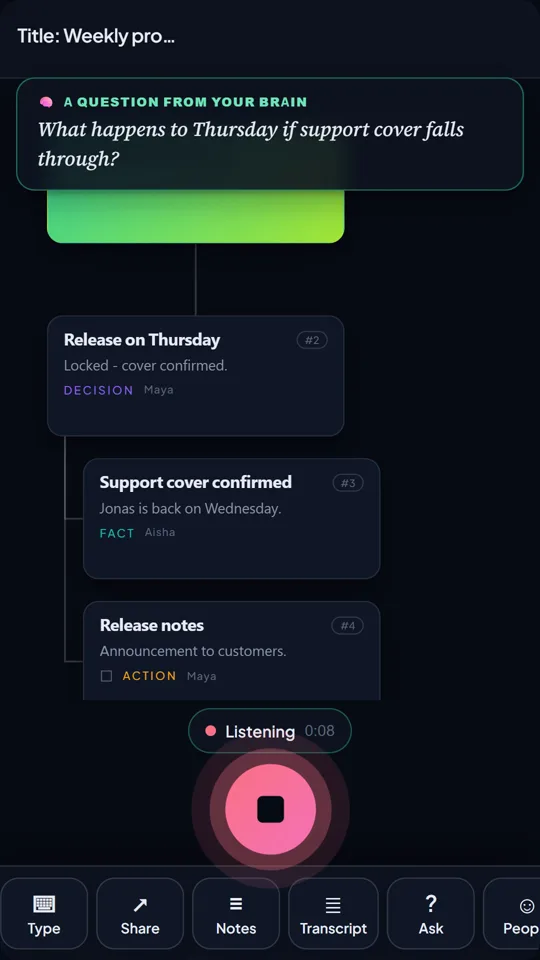
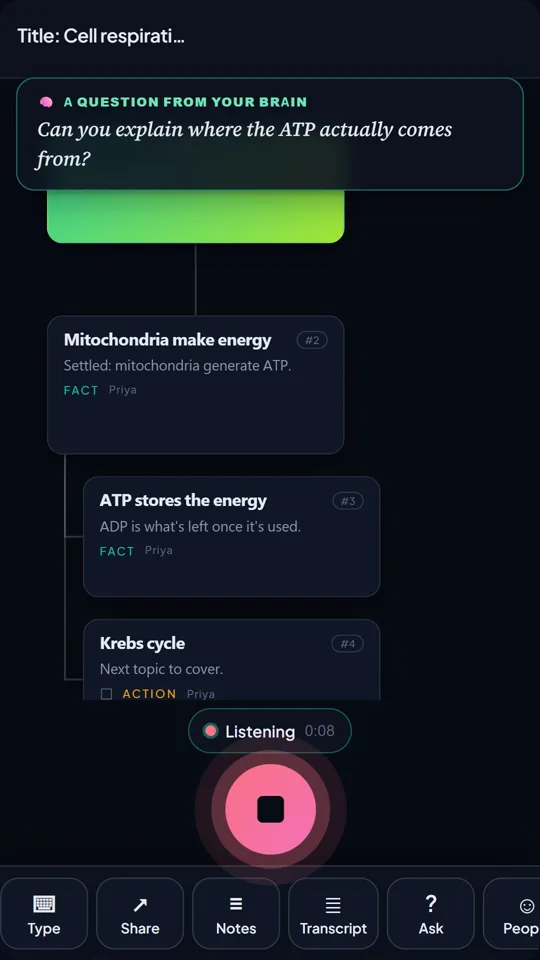
TalkGraph maps what you say as you speak and asks you the next question. Free to try, no sign-up.

Klevis is the founder of TalkGraph, which he built and shipped solo. He has a First Class MSc in Computing and Information Systems, and writes about thinking, learning and tools that help people think rather than think for them.
LinkedIn →