The Feynman technique, done out loud
- Explain a topic in plain words, as if to a beginner.
- Where you stall or reach for jargon is a gap in your understanding.
- Fix just those gaps, then explain again. Out loud is quicker and harder to fake.
The Feynman technique is learning by explaining. You try to explain a topic in plain words, notice where the explanation falls apart, go back to the material for those bits, and try again. The places you stumble are a precise map of what you don't understand yet.
Richard Feynman never wrote down a method with his name on it. The "Feynman technique" is a summary that learning writers started passing around about fifteen years ago, based on how he seemed to work: he didn't trust anything he couldn't explain simply, and he'd keep reworking an explanation until it was clear. The name stuck because the idea is so easy to use.
How it goes
- Pick a topic and explain it in plain words, as if to someone new to it. Any jargon you use, you should be able to define.
- Notice where you get stuck, start waving your hands, or reach for a technical term to cover a gap.
- Go back to the source for just those parts, until you can explain them simply.
- Explain the whole thing again. It's usually shorter the second time.
Step two is the one that matters, and it isn't pleasant. It's the moment you find out that something you thought you knew, you'd only recognised.
Something you thought you knew, you'd only recognised.
What it looks like
Say you're revising photosynthesis. Out loud, you start with "plants take in light and carbon dioxide and make sugar and oxygen", which is fine. Then you try to say what the light actually does, and you stall. That stall is the whole lesson. You go back to the light-dependent reactions, read just that section, and explain again. The second attempt is shorter and a lot clearer.
Why out loud beats paper
You can do this in writing, and plenty of people do. Speaking has a few advantages. It's quicker, so you cover more ground in a sitting. It's harder to cheat: on paper you can leave a gap and promise yourself you'll fill it in later, but out loud you either say the next sentence or you don't. And you can hear yourself hesitate, which makes the gaps hard to ignore.
Pick something you're revising this week and explain it for three minutes as if to a curious twelve-year-old. Each time you hesitate, note where. That list is your revision plan.
A worked example
Say you're learning how compound interest works. A first attempt out loud might go: "Compound interest is when your interest compounds, so your money grows exponentially over time." It sounds fine, but it only renames the thing. Try to say why it grows faster each year and you stall.
That stall sends you back to the source, and the second attempt is different: "You earn interest on your interest. Put £100 away at 10% a year. After one year you have £110. In year two you earn 10% of £110, which is £11, not £10, so you have £121. Each year the amount you earn interest on is bigger, so the growth speeds up." No jargon, a concrete number, and every step follows from the last. That's what understanding sounds like.
Common mistakes
- Explaining to an expert in your head. If you imagine someone who already knows, you'll skip the steps you don't understand. Picture a curious beginner.
- Reading instead of explaining. Going back over the source feels productive, but the technique only works if you explain from memory first.
- Glossing over the stall. The moment you hesitate is the lesson. Mark it, don't talk past it.
- Leaning on jargon. A technical term you can't define in plain words is a gap wearing a disguise.
- Doing it once. The second, simpler explanation, a day or two later, is where the understanding settles.
Does it work for every subject?
It works best for concepts: how something works, why something happens, how ideas relate. That covers most of the sciences, economics, history, law and the ideas behind maths and code. For procedural skills, like solving a type of equation or writing a function, pair it with practice problems: explain the method, then do a few, then explain where you went wrong.
Different ways to use it
- Students: before an exam, explain each topic on the syllabus out loud. Your list of stalls is your revision list.
- Founders: explain your business model to an imaginary twelve-year-old. If you can't say why someone would pay, neither can an investor.
- Teams: explain a new process the way you'd explain it to a new starter. The steps you can't explain are the ones nobody has written down.
The Feynman technique, in TalkGraph
- Open a new map and explain the topic out loud, in plain words, as if to a beginner.
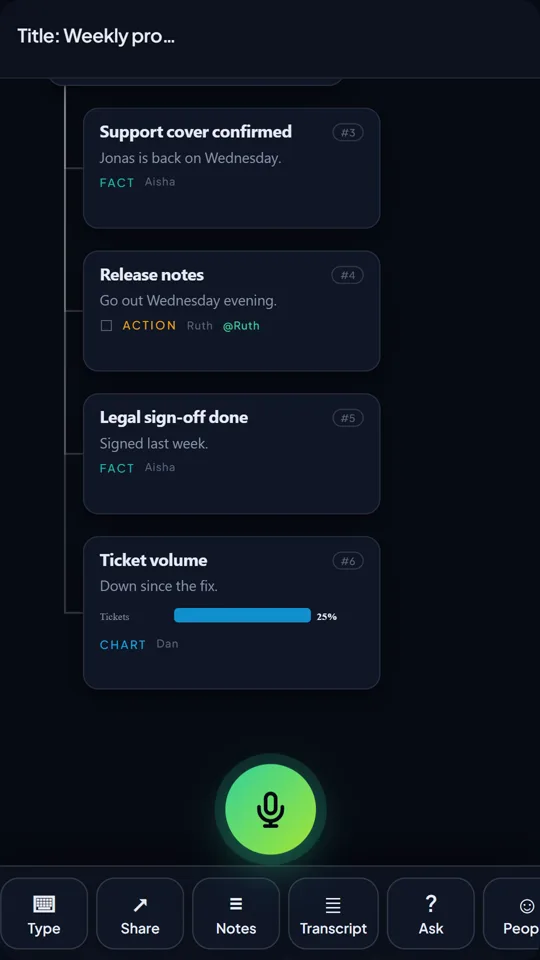
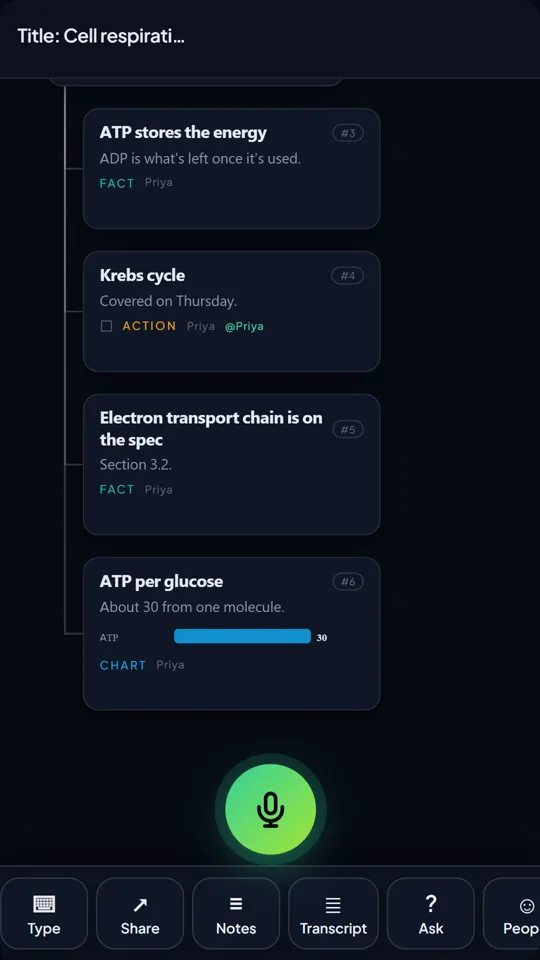
- Watch your explanation become a concept map as you speak: topics as branches, facts and ideas beneath. Where the map stays thin is where your understanding is.
- When you pause, TalkGraph asks you a short question about what you just said. If you can't answer it, that's your gap.
- Look the gaps up, then explain again in a new session. Both maps join your Brain, so you can see the topic grow.
Questions people ask
Did Richard Feynman invent the Feynman technique?
Not as a named method. It's a popular summary, spread by learning writers from around 2011, of how Feynman approached understanding: if you can't explain something simply, you don't understand it yet.
How long should a Feynman session take?
Three to ten minutes per topic is plenty. The value is in finding the stalls, not in talking for a long time.
Do I need someone to explain it to?
No. Explaining out loud to yourself works. What matters is that you explain as if to a beginner, so you can't skip steps.
Is writing the explanation as good as saying it?
Writing works, but speaking is quicker and makes the gaps harder to ignore, because you either say the next sentence or you don't.
TalkGraph maps what you say as you speak and asks you the next question. Free to try, no sign-up.

Klevis is the founder of TalkGraph, which he built and shipped solo. He has a First Class MSc in Computing and Information Systems, and writes about thinking, learning and tools that help people think rather than think for them.
LinkedIn →